NEWS & KNOWLEDGE
Can You Do IVF with Low AMH? What Does AMH Tell You About Fertility?

Can You Do IVF with Low AMH? What Does AMH Tell You About Fertility?
AMH, or Anti-Müllerian Hormone, is a hormone produced by ovarian cells and is one of the indicators used to assess ovarian function and the number of eggs in a woman’s ovaries.
Women with low AMH levels may worry that they will be unable to become pregnant or do IVF/ICSI. However, a low AMH level does not determine whether a woman can or cannot become pregnant. Women with low AMH can still do IVF/ICSI treatment. Doctors will consider AMH levels together with other factors, including age, overall health, uterine condition, and other fertility test results.
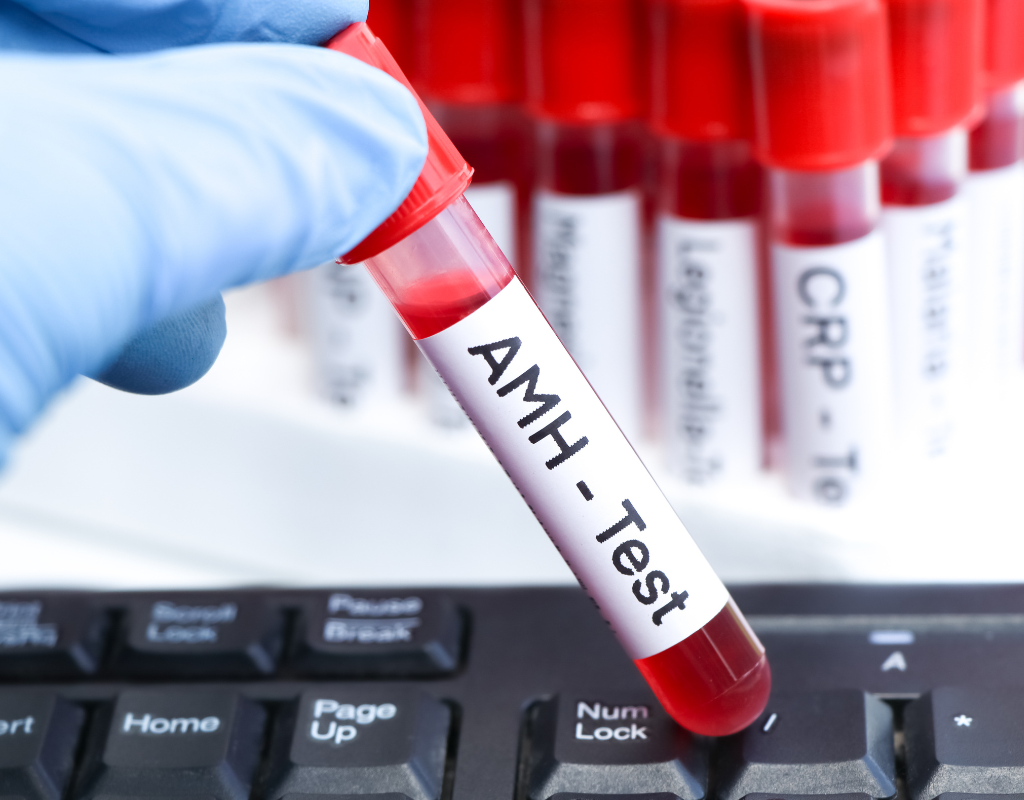
What Does AMH Tell You?
- AMH above 4 ng/mL: A high AMH level may be associated with a higher number of eggs and may also be associated with an increased risk of polycystic ovary syndrome (PCOS).
- AMH 1–4 ng/mL: Considered within the normal range.
- AMH below 1 ng/mL: A low AMH level may be associated with a reduced number of eggs.
- AMH below 0.5 ng/mL: A very low AMH level may be associated with a reduced number of eggs and menopausal status. Women who wish to have children are advised to consult a doctor for appropriate fertility planning.
It is important to note that AMH cannot directly assess egg quality and cannot be used alone to determine the likelihood of natural conception. Other factors should also be considered, particularly the woman’s age, as age is associated with egg quality and the chances of becoming pregnant.
Can Women with Low AMH Do IVF/ICSI?
Yes. Women with low AMH can still do IVF/ICSI treatment. AMH can help doctors assess how the ovaries may respond to ovarian stimulation medication and assist in developing an appropriate treatment plan for each patient.
For women with low AMH, the ovaries may respond less strongly to stimulation medication, and fewer eggs may be retrieved during each treatment cycle. However, having fewer eggs does not mean that pregnancy is impossible. The outcome of fertility treatment depends on multiple factors, including egg quality, fertilization, embryo quality, and endometrial receptivity.
A low AMH level does not mean that IVF/ICSI cannot be performed, nor does it indicate that a woman will be unable to have children. Instead, AMH provides useful information that helps doctors assess ovarian response and develop an appropriate fertility treatment plan. However, AMH cannot determine egg quality or the likelihood of pregnancy on its own. A comprehensive fertility assessment should consider the woman’s age, follicle count from ultrasound, sperm quality, and other relevant factors.
If you have been found to have a low AMH level and are planning to have children, consulting a reproductive medicine specialist at an early stage can help you develop an appropriate fertility treatment plan tailored to your individual circumstances.
For further information, please contact:
LINE Official Account: @nic_clinic or https://lin.ee/Mmq6m2K
Tel: +66 2-007-3973 or +66 95-370-2483


 ENGLISH
  THAI
THAI  中文
中文